
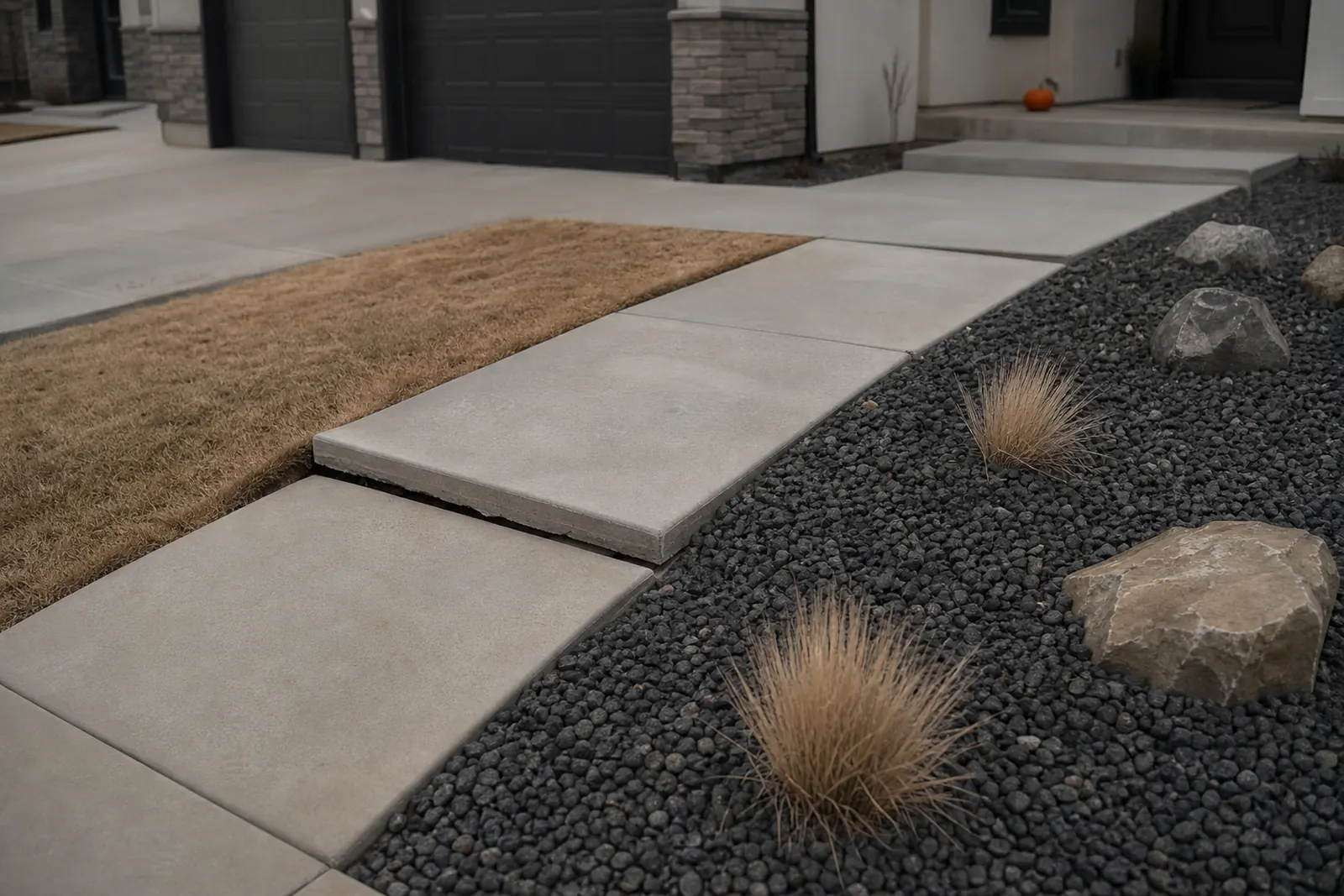
What is concrete settlement?
Concrete settlement is the slow downward movement of a slab as the soil under it compresses, erodes or loosens. It’s the process behind most sunken, tipped and uneven concrete. Some settlement happens early and stops. Some keeps going for years because water or loose fill keeps changing the ground. Whether it’s still active affects how and when to fix it.
Settlement is a process, not an event
People usually notice settlement all at once: one day there’s a lip at the garage that wasn’t there before. But the movement almost always started long before. The soil under the slab changed a little each season until the concrete finally dropped enough to see.
Understanding that helps with two questions: why it happened, and whether it’s going to keep happening.
Why slabs settle
The soil was never compacted well
When a house is built, soil is dug out for the foundation and pushed back in afterward. Driveways, patios and walks are often poured on top of that fill. If it wasn’t compacted in layers, it keeps compressing under its own weight and the weight of the slab. The same happens over utility trenches that were backfilled.
Water keeps moving soil
Downspouts, sprinklers, irrigation and leaks carry fine soil out from under slabs, especially at edges. Soil washout under concrete covers this.
Seasons loosen the base
Water in the soil freezes and expands in winter, then thaws. Each cycle leaves the base a little looser. Areas that stay wet into winter see the most of it.
Some soils change with moisture
Fine, silty soils can lose strength when they get wet and pack down further. That’s part of why a slab near a sprinkler can settle while one a few feet away doesn’t.
Why does concrete sink? explains each of these in more depth.
New homes vs older homes
| Situation | What tends to happen |
|---|---|
| Newer home, first several years | Backfill around the foundation is still compressing. Aprons, steps and patios next to the house often move first |
| Established home | Movement is usually driven by water: sprinklers, downspouts, leaks, changes in landscaping |
| After new landscaping or irrigation | A slab that was stable for years may start moving as water patterns change |
| After a plumbing or irrigation leak | Sudden, localized settling where water washed soil out |
Active or finished?
This is the question that decides timing.
- Finished settlement happened, then stopped. The slab dropped and has been in the same spot for a while. It’s usually a straightforward lift.
- Active settlement is still going on. The edge is bigger this year than last, cracks are widening, or you see soil washing out. Find the cause, usually water, and fix it along with the lift.
How to tell
Mark it and measure it. Put a pencil or paint mark on both sides of the joint and measure the offset. Check it again in a few months, and again after winter. If it’s growing, it’s active. Photos with a tape in them work well too. Signs of concrete settlement has a full walk-around checklist.
What settlement leads to
Left alone, settlement tends to produce the other problems on this site: sunken concrete, uneven concrete, trip hazards, water pooling and eventually cracked and sunken concrete.
How settled concrete is fixed
Sunken
Concrete has settled or lost support.
Lifted
Polyurethane foam is injected beneath the slab.
Level
The slab is raised toward its proper position, and the void space is stabilized.
Polyurethane foam is injected through small holes beneath the settled slab. It fills the empty space the settlement left behind and raises the slab back into line. Because the foam is lightweight, it adds very little load to the soil underneath. Polyurethane concrete lifting explains the material, and can sunken concrete be lifted? explains how we decide if a slab is a good candidate.
Concrete settlement questions
Is it normal for concrete to settle?
Some settlement is common, especially around newer homes where backfill is still compacting. It becomes a problem when it creates trip edges, pooling or water running toward the house.
Should I wait for settlement to stop before lifting?
Not usually. If the cause is water, fixing the water and lifting the slab can happen together. Waiting often means the slab cracks or drops further.
Why did my slab start moving after years of being fine?
Something changed, usually water. New sprinklers, a leak, a new downspout location or landscaping changes can all start settlement on a slab that was stable.
How do I track whether settlement is getting worse?
Mark both sides of the joint and measure the offset, then check again after a few months and after winter. Photos with a tape measure in them work well.