
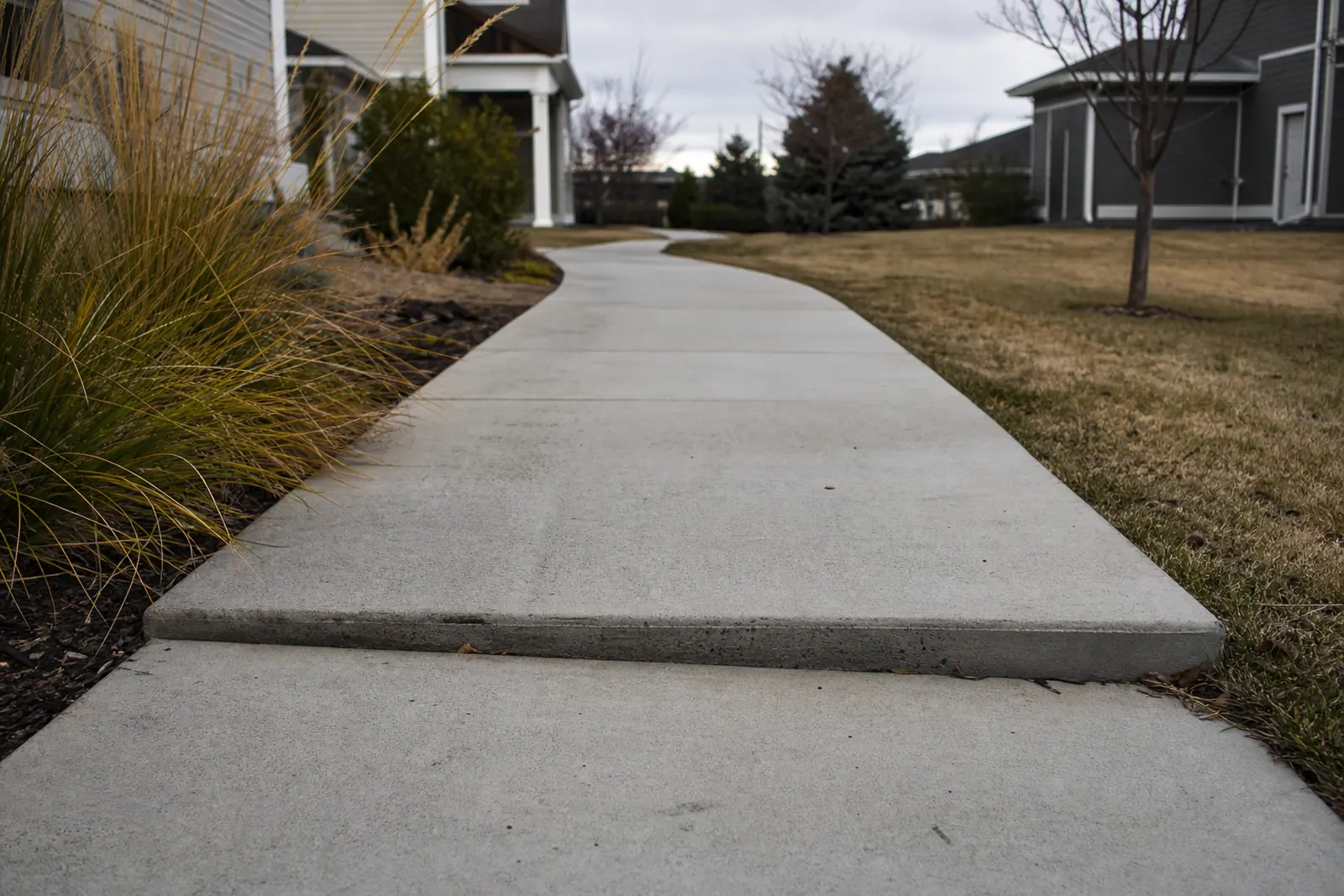
Can an HOA level common-area concrete instead of replacing it?
Often, yes. Shared walks, entry paths, mailbox areas and pool decks in a community settle over time, and trip edges show up across the neighborhood. When the sections are still intact, polyurethane foam can lift them back in line without demolition, usually for less than replacement and with far less disruption to residents. Sections that are broken up or heaved are the exception.
Common-area concrete we see
- Walking paths and greenbelt walks through the community
- Walks around a clubhouse, pool or playground
- Entry walks and sidewalks along common landscaping
- Mailbox cluster pads and the walks to them
- Pool decks and patio areas around shared amenities
- Walks and stoops at attached homes or townhomes the association maintains
What’s the association’s to maintain and what’s the homeowner’s depends on your governing documents. We can work with the board, the manager or individual owners.
Why boards call
- A resident tripped, or several have complained about the same spot
- An insurance or reserve study walkthrough flagged uneven concrete
- Ice forms on the same low sections of path every winter
- Walks along common landscaping are tipping toward irrigation
- A contractor quoted replacing an entire path, and the board wants a second look
That last one comes up often. A long path usually has a few sections that moved and many that didn’t. Replacing the whole thing isn’t always necessary.
Giving the board what it needs
HOA decisions go through a board, and boards need clear information. At the evaluation, we walk the common areas with the manager or a board member and sort what we find:
| Group | What goes in it |
|---|---|
| Lift now | Trip edges, sections holding water or ice, anything flagged by residents |
| Watch | Small offsets that aren’t causing trouble yet |
| Replace | Sections broken into pieces, crumbling or pushed up by roots |
That makes it easier to prioritize, budget and explain the decision to residents. If you need something specific for a board meeting, tell us and we’ll talk through what would help.
Why lifting suits community property
- There’s far less disruption. Nothing gets broken out, no concrete trucks come through the neighborhood, and paths aren’t closed for days while new concrete cures.
- Lifted sections keep the same color and finish as the rest of the path, so you don’t end up with a patchwork of new and old.
- Work is done from the top of the slab through small holes, so turf, trees and irrigation beside the path are left alone.
- Every completed job ends with a wash down of the work area.
Irrigation is usually the cause
Common-area walks run through irrigated turf and beds for most of their length. Sprinkler overspray and runoff wash soil out from under walk edges year after year. That’s why settlement in HOAs tends to show up along the same stretches. Adjusting spray heads along paths helps a lift hold. Soil washout under concrete explains the process.
Individual homeowners
If you’re a homeowner in an HOA and the concrete in question is yours to maintain, like your own driveway or walk, the residential pages apply: driveway leveling, walkway leveling and sidewalk leveling.
Getting started
The evaluation is free. The general commercial side is on commercial concrete leveling, and rental communities are covered on apartment and multifamily concrete leveling.
HOA concrete questions
Can you meet with our property manager instead of the board?
Yes. We can walk the property with whoever is responsible and go through what we find.
Do you lift pool decks?
Concrete pool decks that settled can often be lifted. We'll look at how the deck meets the pool edge before recommending anything.
Can homeowners in the community book their own work at the same time?
Yes. If owners have their own driveways or walks that need attention, we can look at those too.
Why did our path settle along the same stretches?
Usually irrigation. Sprinklers along the path wash soil out from under the edges year after year.