
How much does concrete leveling cost?
It depends on the slab, which is why we don’t publish a price list. The cost of a lift comes down to how much concrete needs to move, how far it dropped, how much empty space is underneath, how easy it is to reach and what condition the slab is in. The evaluation is free, and we’ll walk you through exactly what’s driving the price on your job before any work is done.
Why there’s no price list
Two sidewalk squares that look identical from the top can be very different jobs. One might have a thin gap under one edge. The other might sit over a pocket where a sprinkler has been washing soil out for years. The second one takes much more foam. A flat per-square-foot number would be wrong for one of them, and usually both.
The factors
| Factor | Why it matters |
|---|---|
| Slab size | Bigger slabs usually need more ports and more foam |
| Number of panels | Each panel is lifted and matched to its neighbors |
| How far it dropped | A bigger drop usually means more empty space to fill |
| Void conditions | More empty space underneath means more foam |
| Access | Hard-to-reach areas take longer to set up and work |
| Lift complexity | Tipped slabs, steps and panels that must line up on several sides take more care |
| Slab condition | Cracked slabs may need more ports and a slower lift |
| Project scope | Several areas in one visit, or one small spot |
Slab size and number of panels
A single garage apron is a different job from an entire run of sidewalk. More concrete generally means more ports, more foam and more time. But size isn’t everything. A large slab that dropped evenly with little void under it can be simpler than a small one that tipped over a big washout.
How far it dropped
A slab that’s a quarter inch low usually has a thin void under it. A slab that’s dropped a couple of inches has lost a lot of support, and that space has to be filled before the slab can come up.
Void conditions
This is often the biggest variable, and it’s the one you can’t see. Foam is sold by volume. If there’s a large pocket under the slab, filling it takes more material. We estimate voids at the evaluation by sounding the slab and looking at the edges.
Access
A driveway panel next to the street is easy to reach. A patio in a fenced backyard behind a narrow gate takes longer to set up. Hoses can run a long way, so most areas can be reached, but it can affect time.
Lift complexity
Steps that need to rotate back toward the house, slabs that must line up with the garage floor, a walkway that meets the steps at one end and the driveway at the other: these take more careful, gradual work than a single panel dropping straight down.
Slab condition
A cracked slab is lifted with the pieces together, which can mean more ports and a slower pace.
Project scope
If you have a sidewalk square, a patio corner and a driveway panel that all need attention, doing them in one visit can make more sense than calling about each one separately. Ask about it at the evaluation.
What’s not in the cost
Part of the difference between leveling and replacement is what you don’t pay for with a lift:
- No breaking out the old concrete
- No hauling away and disposing of broken concrete
- No forms, new base material or new concrete
- No waiting for new concrete to cure before using the area
- Usually no repairing landscaping or sprinklers torn up to get equipment in
Concrete leveling cost vs replacement goes into this comparison.
What’s included
Every completed job ends with the ports patched and the work area power washed. The wash down is free.
Ways to keep the cost down
- Deal with it early. A slab that just started to drop has less void under it and hasn’t cracked yet.
- Fix the water. Redirecting downspouts and sprinklers helps the lift hold, so you’re not paying for the same spot twice.
- Group the work. If several areas need attention, having them looked at together helps.
Getting an accurate number
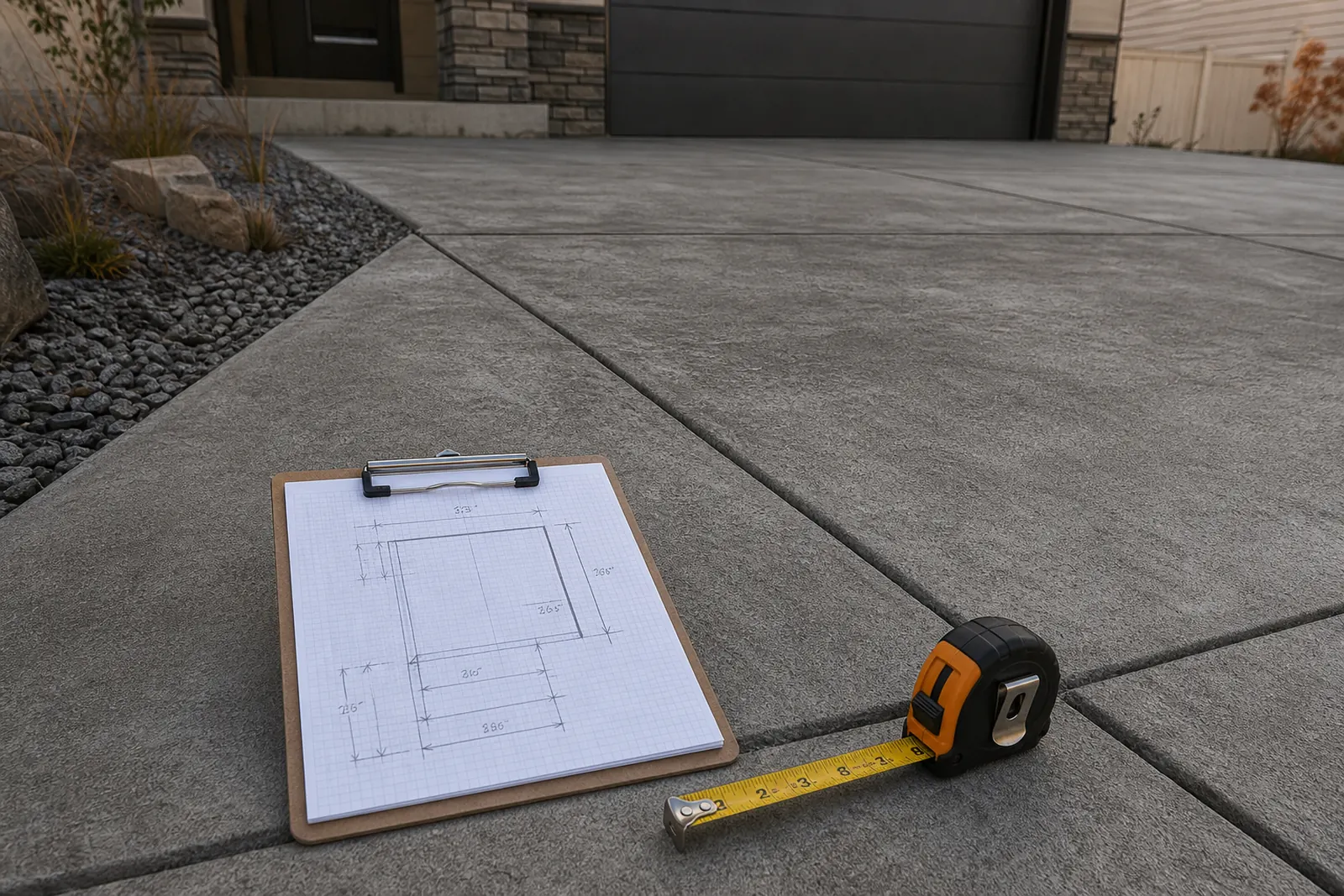
The only way to price a lift accurately is to see the slab. The evaluation is free: we look at the concrete, explain what we see and what’s driving the price, and tell you whether lifting makes sense at all. If you’d like a rough idea first, send photos through the evaluation form. A wide shot and a close-up with a tape measure help.
For driveways specifically, see driveway leveling cost. To decide whether the job is worth doing at all, is concrete leveling worth it? may help. And the service itself is covered on concrete leveling.
Cost questions
Why can't you give me a price over the phone?
The biggest cost factor is how much empty space is under the slab, and that can't be judged without seeing it. Photos help us give you an idea, and the free evaluation gives you a real answer.
Do you charge by the square foot?
Not as a flat rate. Square footage is one factor, but the empty space under the slab, how far it dropped and access often matter more.
Is the power washing extra?
No. Every completed job ends with a free wash down of the work area.
Does a bigger drop always cost more?
Usually, because a bigger drop tends to mean more empty space to fill. But void size varies, so we confirm it at the evaluation.