
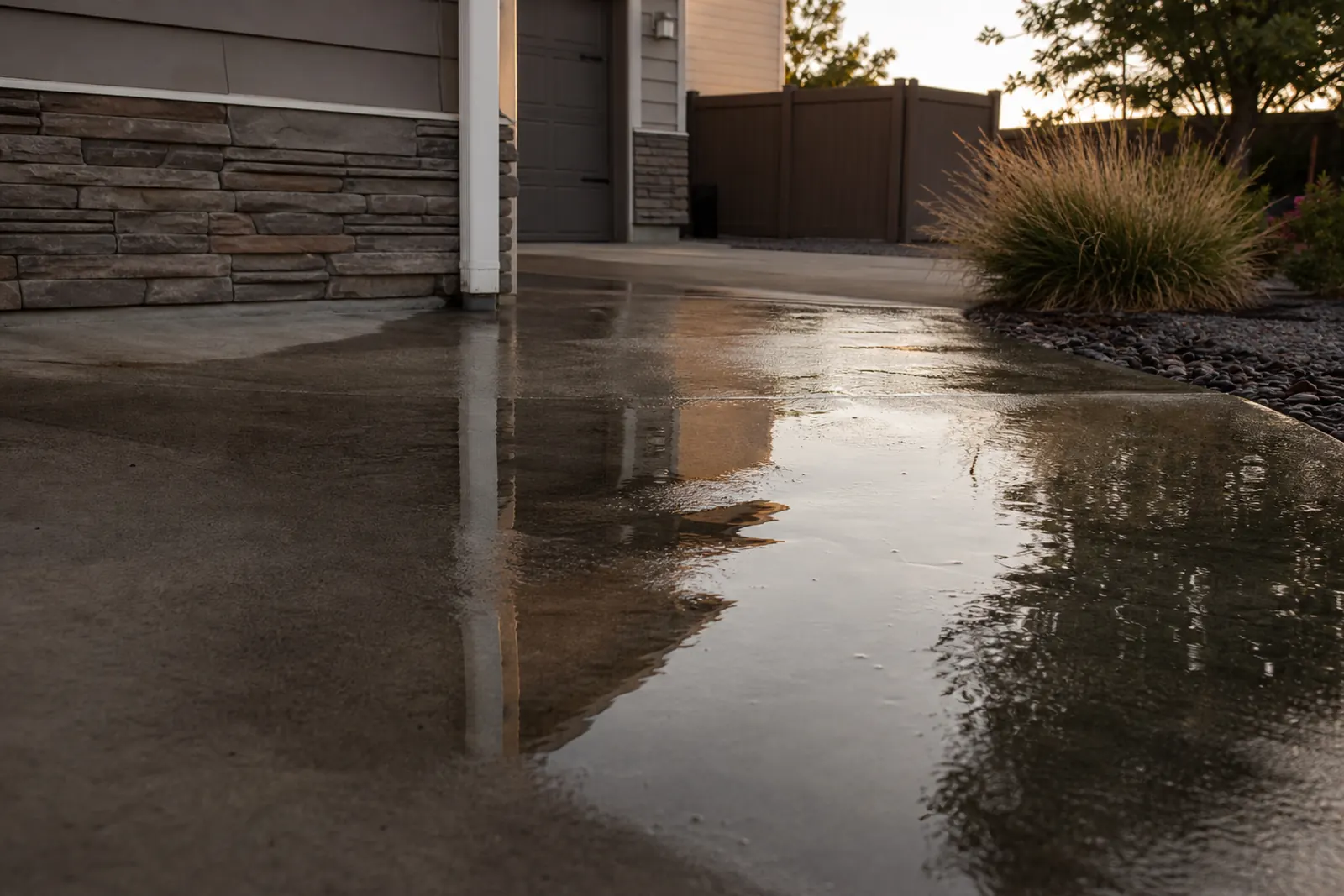
Why is water pooling on my concrete?
Most of the time, part of the slab has settled and created a low spot, or the slab has tipped so water runs the wrong way. If the pooling started after the slab was poured and has gotten worse, settlement is the likely cause, and lifting the low area back into line usually lets the water drain the way the slab was built to. If the slab was poured without enough slope to begin with, lifting may help less, and we’ll tell you.
Where pooling shows up
- A puddle on one driveway panel that sits for hours after rain or sprinklers
- Water standing against the house on a patio or walk
- A wet line along the garage door after a storm
- Ice patches in the same spot every winter
- A dark stain or green film where water keeps collecting
- Water running toward the house instead of the yard
The ice patch is often what gets people to call. Water that pools in a low spot freezes overnight and turns into a slip hazard in the same place every morning.
Why pooling is worth fixing
Water finds its way under the slab
Standing water seeps into joints and cracks and down the edges. Once it’s under the slab, it softens the soil and carries fine particles away, which creates more empty space and more settling. Pooling and settlement feed each other.
Water at the house
A patio, walk or apron that tips toward the house sends water at the foundation. That can mean damp crawl spaces, wet garages and more washout under the slab by the wall.
Freeze and thaw
Water in a low spot freezes, expands and breaks down the surface over time. You’ll often see scaling or flaking where water sits all winter.
Settlement, or poured that way?
| Clue | Probably settlement | Probably original slope |
|---|---|---|
| When it started | Developed over time | Has always happened |
| What else you see | A lip at a joint, a tipped panel, gaps at edges | Slab looks level and joints are even |
| Where the low spot is | At one panel or corner | Spread across a flat area |
When settlement is the cause, the low spot usually lines up with a joint, an edge or a single panel that moved. That’s the kind of pooling lifting fixes best.
How lifting fixes pooling
Sunken
Concrete has settled or lost support.
Lifted
Polyurethane foam is injected beneath the slab.
Level
The slab is raised toward its proper position, and the void space is stabilized.
We inject polyurethane foam beneath the low area through small holes. As the foam expands, it fills the empty space and raises that part of the slab. We check the slope as we go, aiming to get water moving off the slab and away from the house. The holes are patched and the slab is washed down. How foam concrete lifting works explains the steps.
What lifting can’t change
Lifting brings a settled slab back toward where it was. It can’t add slope that was never there, and it can’t fix a surface that has worn into a dip. If your slab was poured nearly flat, lifting may improve drainage but might not solve it completely. If that’s the case, we’ll say so, and when should concrete be replaced? covers the replacement side.
It’s also worth looking at where the water comes from. Downspouts that dump onto the slab and sprinklers that overspray the concrete are common culprits, and redirecting them helps whatever you do with the slab.
Which slab is pooling?
Each service page covers the details for that slab: driveway leveling, patio leveling, garage apron leveling and walkway leveling. If the slab has settled, can sunken concrete be lifted? explains how to tell if it’s a good candidate.
Water pooling questions
Will lifting stop water from pooling on my driveway?
If the low spot formed because a panel settled, lifting it back into line usually lets water drain again. If the driveway was poured too flat, lifting may help but might not solve it.
Why does ice form in the same spot every winter?
Water collects in a low area and freezes overnight. That low area is often a settled panel or a tipped edge.
Is water pooling against my house a concern?
It's worth dealing with. Water sitting against the foundation can lead to damp crawl spaces and more washout under the slab. Restoring the slope away from the house helps.
Should I seal the joints?
Sealing joints and the gap along the house helps keep water from getting under the slab. It works best after the slab is back in line.