
Short answer
For polyurethane foam leveling, most manufacturers and contractors say the slab can take foot traffic within about 15 minutes and normal passenger-vehicle traffic within about 15–60 minutes after injection finishes. That is one of the main reasons foam lifting is popular for Twin Falls driveways, garage aprons and sidewalks: you are usually using the surface the same day, not waiting a weekend the way you would after a mudjacking slurry cure or a full replacement pour.
What the foam is doing under the slab
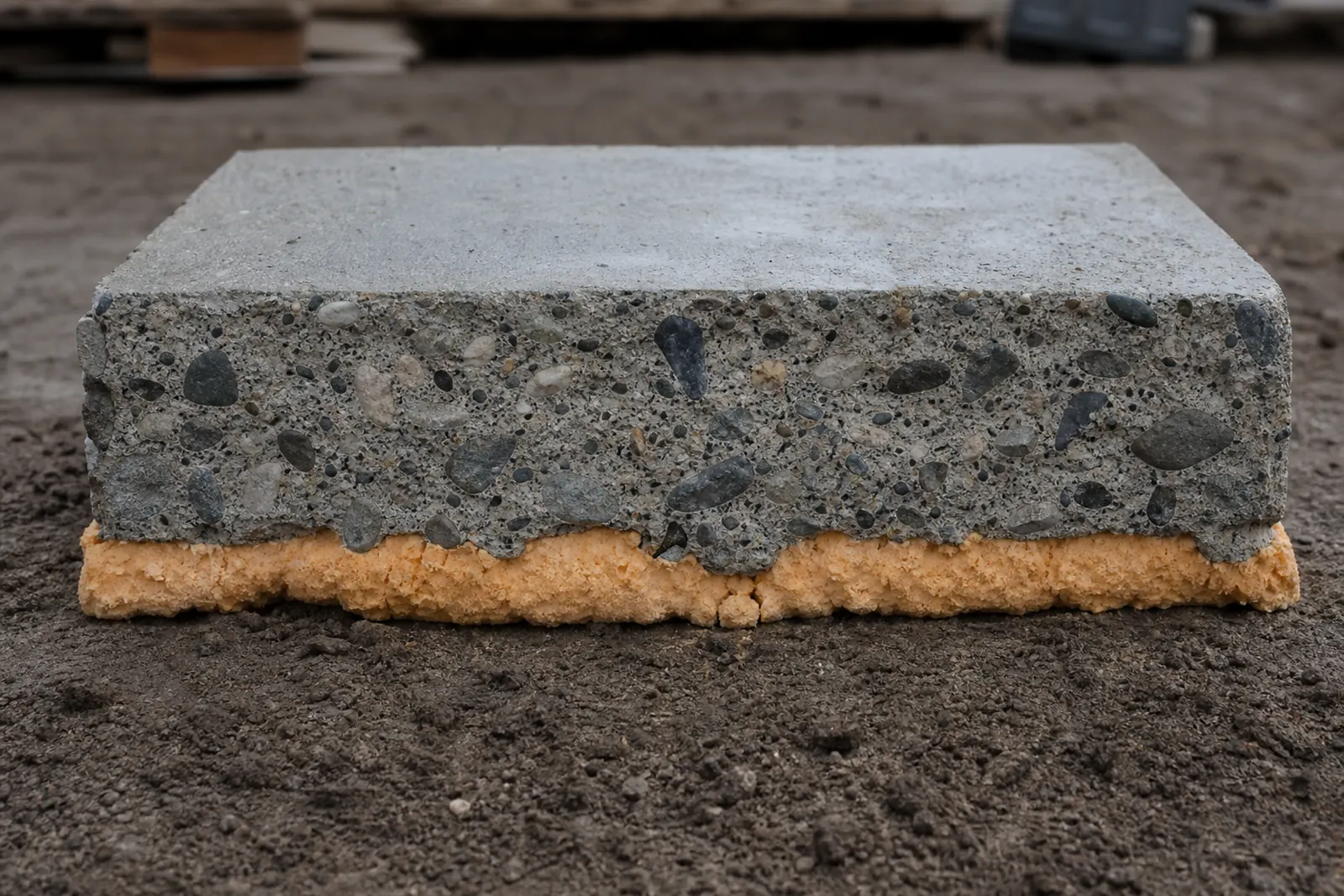
During a foam lift, a crew drills small ports, injects a two-part polyurethane resin, and the material expands to fill voids and raise the slab. Industry technical pages from foam suppliers such as NCFI describe a rapid reaction: the foam expands within seconds and reaches working strength quickly enough that many projects are ready for traffic by the time the crew finishes cleanup.
Closed-cell polyurethane used for slab lifting is lightweight compared with cement slurry. That matters on Magic Valley soils that already settled once—adding thousands of pounds of mudjacking slurry can reload weak ground, while foam adds very little weight. The same closed-cell structure also resists water absorption, which is useful where irrigation runoff, downspouts or spring thaw keep soil wet under driveways in Twin Falls, Kimberly and Jerome.
Typical timelines homeowners hear
- Walking: Often within 15–30 minutes after the last injection, once the surface is clear of tools and open ports are patched.
- Cars and light trucks: Commonly 15–60 minutes, sometimes described as “by the time we leave the job.” Contractor FAQs such as Local Concrete Lifting and PolyJacks fall in this same-day window for regular traffic.
- Heavy loads: Some crews ask you to wait up to about 48 hours before parking RVs, trailers, dumpsters or other concentrated loads on a freshly lifted panel, even though the foam has already reached most of its strength. Follow the written instructions you get for your job.
Mudjacking (cement slurry) is different: it often needs 24–48 hours before heavy loading while the slurry cures. If you are comparing methods on a Twin Falls driveway, same-day use is one of the practical differences—not just hole size or material weight. See also polyurethane concrete lifting and leveling vs replacement.
What can change the wait on your property
Cure guidance is a starting point, not a guarantee for every slab:
- Weather. Cold mornings in the Magic Valley slow chemical reactions. Crews may adjust mix or ask for a longer wait before vehicles.
- How broken the slab was. A panel lifted as one piece behaves differently from a section with multiple cracks. Patches over injection ports also need a short set time before scraping tires grind them down.
- Drainage still working against you. Foam stabilizes voids, but if a downspout still dumps onto the apron or irrigation still saturates the edge, soil can keep moving. Addressing water is part of making the lift last—see our guides on voids and why concrete sinks.
- Interior vs exterior. Garage floors and warehouse slabs often return to foot traffic quickly; vehicle timing still follows the crew’s instructions for that mix and load.
Day-of-job checklist for Twin Falls homeowners
- Clear cars, toys and trash cans off the work area before the crew arrives.
- Ask which panels will be lifted and when each one can take traffic again—especially if you need one lane of the driveway open for work or school.
- Keep sprinklers off the work zone during and shortly after the lift so ports and patches are not washed out.
- Do not park a heavy trailer or RV on a panel the crew just finished until they say it is ready.
- After the job, watch for new lips or pooling after the next big irrigation set or snowmelt; early movement is easier to address than waiting a full season.
Foam leveling vs pouring new concrete
New concrete needs days before light use and weeks to approach design strength. Foam leveling of a sound slab is usually measured in hours on site and minutes to hours before driving. That does not make every sunken slab a candidate for lifting—severely shattered concrete may still need replacement—but when lifting is appropriate, downtime is one of the biggest homeowner benefits.
Sources
- NCFI: Concrete Leveling Foam — manufacturer notes on rapid cure and same-day traffic for many projects.
- Local Concrete Lifting: How Soon Can I Walk or Drive on Lifted Concrete?
- PolyJacks FAQ — example contractor guidance on light traffic vs heavier loads.
Next step in Twin Falls
If a driveway, sidewalk or garage apron has settled and you want a clear answer on whether it can be lifted—and how the day-of traffic plan would work—request a free evaluation or call 208-415-9217. Start with our driveway leveling service page or the Twin Falls location page for local context.